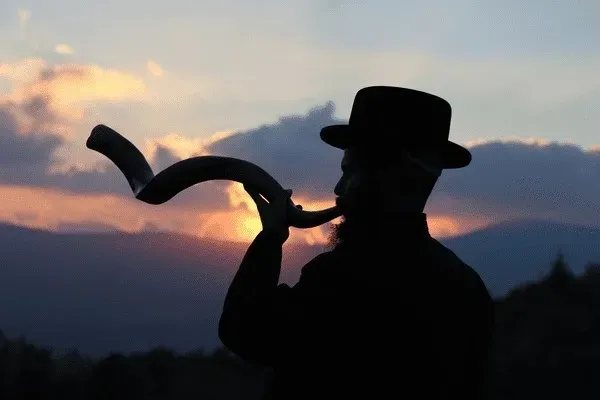
And just like that, it is once again time for the fall holy days–I may be biased, but dare I say it is the best time of year. This year, 2025, the Feast of Trumpets, otherwise known as Rosh Hashanah, falls in September. We can find information about this feast in Leviticus 23:24, where God commands His people: “In the seventh month, on the first day of the month, you shall have a sabbath-rest, a memorial of blowing of trumpets, a holy convocation.” Notice how the verse does not give a reason for the observance, simply that we are to do it. It is mentioned again in Numbers 29, saying: “And in the seventh month, on the first day of the month, you shall have a holy convocation. You shall do no customary work. For you it is a day of blowing the trumpets.” Again, the Lord does not specify what this blowing of trumpets is meant to memorialize. Interestingly, this feast is the only feast for which the Lord does not specify a purpose. While we may not have a why, we do at least have a how. According to both the aforementioned verses, the Feast of Trumpets, or Yom Teruah, is meant to be observed with a Sabbath rest (no work), a holy convocation (a gathering of believers), and the blowing of the trumpet (shofar/ram’s horn).
While this is all that is mentioned in the Torah specifically, there are a few Jewish traditions also tied with this holy day, which is also called Rosh Hashanah. In Jewish tradition, this is seen as the Jewish New Year, and therefore comes with its own set of customs. A few things one might do to celebrate Rosh Hashanah, is to bake and eat round challah loaves enriched with fruit and icing, as well as dip apple slices in honey. Both of these are meant to symbolise a sweet new year to come. Rosh Hashanah is also the start of the 10 Days of Awe, ending with Yom Kippur, the day of atonement. According to Jewish tradition, Rosh Hashanah is the day when one’s name is inscribed in the book of life or death, and Yom Kippur the day that book is sealed for the coming year. Therefore, the 10 days in between are spent in deep introspection, searching oneself and repenting for sins. That way, when Yom Kippur arrives, one can ask for forgiveness and begin the new year with a clean slate.
Whether you call it Yom Teruah or Rosh Hashanah, observe it as a new year or not, this first of the fall feasts is one of joy, of family and friends, and of course, loud noise, generally in the form of shofar blasts. Although, my friends and I have also been known to celebrate with an annual screaming contest. So, screaming or trying your lungs out for 100 shofar blasts, take a deep breath and get ready for the greatest season of the year.


